

Southeast Asia holds enormous economic and innovation potential. The region is rich in talent, entrepreneurial energy, and market opportunity. However, this potential cannot be fully realized as long as ecosystems continue to operate in silos. Fragmentation across capital, regulation, and collaboration structures has become a structural barrier to regional growth rather than a temporary constraint.
Fragmentation as a Structural Challenge
The challenge facing Southeast Asia is not a lack of ideas or founders. It is structural. Domestic capital remains limited for sustaining long term investment in innovation, education, and infrastructure. Regulatory frameworks, standards, and systems differ significantly across countries, making cross border collaboration costly and complex. As a result, startups often struggle to scale regionally, even when demand exists beyond their home markets.
This fragmentation does not only limit startup growth. It also constrains regional capital flows and discourages long term investment. When ecosystems are disconnected, capital becomes cautious, risk increases, and collaboration remains bilateral or ad hoc rather than scalable.
Indonesia provides a clear illustration of this structural limitation. The country’s tax ratio remains at approximately 10 to 11 percent, far below the OECD average of around 33 percent. This gap limits fiscal capacity to support high value sectors and long term innovation. At the same time, domestic savings and capital formation are insufficient to meet future development needs. Similar constraints exist across the region, reinforcing the reality that domestic capital alone cannot carry the burden of long term regional transformation.
The Need for a Regional Innovation Ecosystem
Addressing these challenges requires a regional innovation ecosystem that is designed intentionally, not organically left to chance. Such an ecosystem must be interoperable, allowing systems, standards, and actors to work across borders. It must be collaborative, enabling trust based partnerships rather than transactional engagement. Most importantly, it must be cross border by design, embedding regional thinking from the outset rather than treating regional expansion as an afterthought.
Together, these principles allow collaboration to scale beyond isolated partnerships. They reduce friction, lower coordination costs, and create shared pathways for innovation, capital, and talent to move across Southeast Asia.
ATLAS as a Case in Practice
One example of how this approach can be operationalized is ATLAS, a cross border collaboration initiative co founded by KUMPUL in Indonesia, Techshake in the Philippines, Innolab in Vietnam, and Techsauce in Thailand.
ATLAS is designed not as a symbolic partnership, but as a practical mechanism for translating collaboration into action. Its approach focuses on launching joint initiatives, connecting ecosystems across Asia Pacific through shared programs, and testing how cross border collaboration can be operationalized at scale. Rather than creating parallel structures, ATLAS works within existing ecosystems to improve connectivity and alignment.
Beyond Technical Solutions
A key insight from this work is that regional transformation is not driven by technical solutions alone. Technology can enable connection, but it cannot substitute for intentional coordination across people, policy, trust, and infrastructure. Without alignment in these areas, even the most advanced platforms struggle to deliver meaningful regional impact.
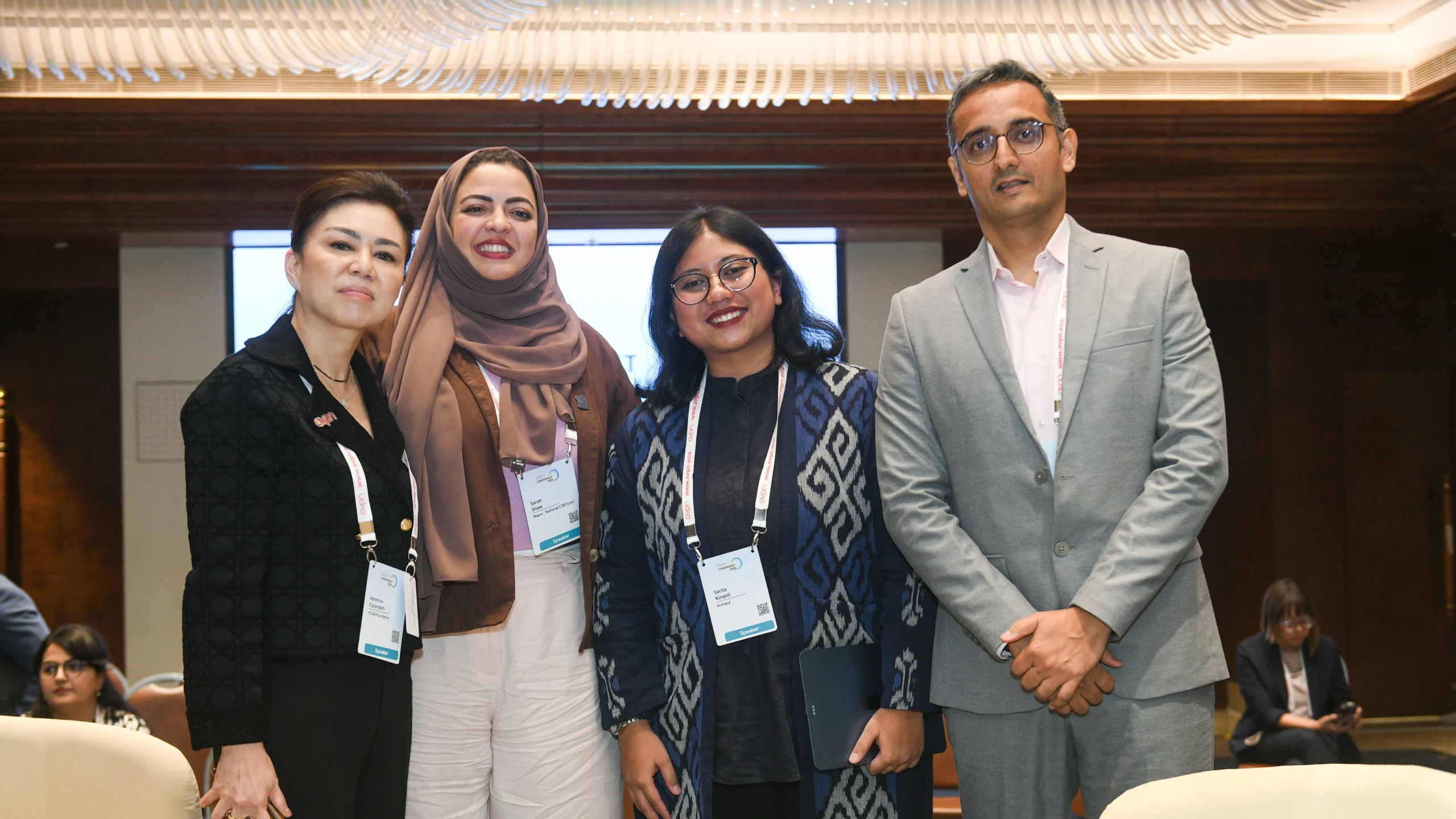
These insights were reinforced during the session titled Bridging the Gaps Building a Regional Innovation Highway for Southeast Asia at the C4C Summit 2024. The discussion brought together perspectives from venture capital, corporate leadership, policy, and future oriented ecosystem building. Speakers highlighted that sustainable regional growth requires shared intent and coordinated execution across sectors and borders.
From Fragmentation to Shared Momentum
Southeast Asia’s next phase of growth depends on its ability to move from fragmented ecosystems to connected ones. This shift is not automatic. It requires deliberate design, trusted partnerships, and regional initiatives that move beyond national boundaries.
Through efforts such as ATLAS, cross border collaboration is being tested in practice, not just discussed in principle. These initiatives offer a pathway toward a more interoperable and collaborative regional innovation ecosystem, where talent, capital, and ideas can move with greater ease and impact across Southeast Asia.
Grow Locally, Expand Globally with KUMPUL
As Indonesia’s leading entrepreneurship ecosystem enabler, KUMPUL accelerates growth by connecting entrepreneurs with strategic networks, exclusive resources, and expert insights.
We strengthen local communities while facilitating two-way global market access, helping international businesses tap into Indonesia’s dynamic ecosystem, and empowering local entrepreneurs to expand globally.
Through impactful collaborations with key industry players, KUMPUL enables entrepreneurs to scale efficiently, compete globally, and create meaningful impact.
Ready to be part of this journey? Complete this form and join KUMPUL in shaping the future of entrepreneurship!